What Accounts for 90% of Deck Collapses? (And How to Avoid Them)
Deck collapses are one of those things homeowners don't think about until they happen — and then they happen fast, often during a backyard gathering when the deck is loaded at full capacity. The sobering reality is that most deck failures trace to the same structural deficiencies, almost all of which are preventable and most of which are invisible once the deck surface is installed. As someone who builds and repairs decks in Lawrenceburg and Pulaski, here's what you actually need to know.
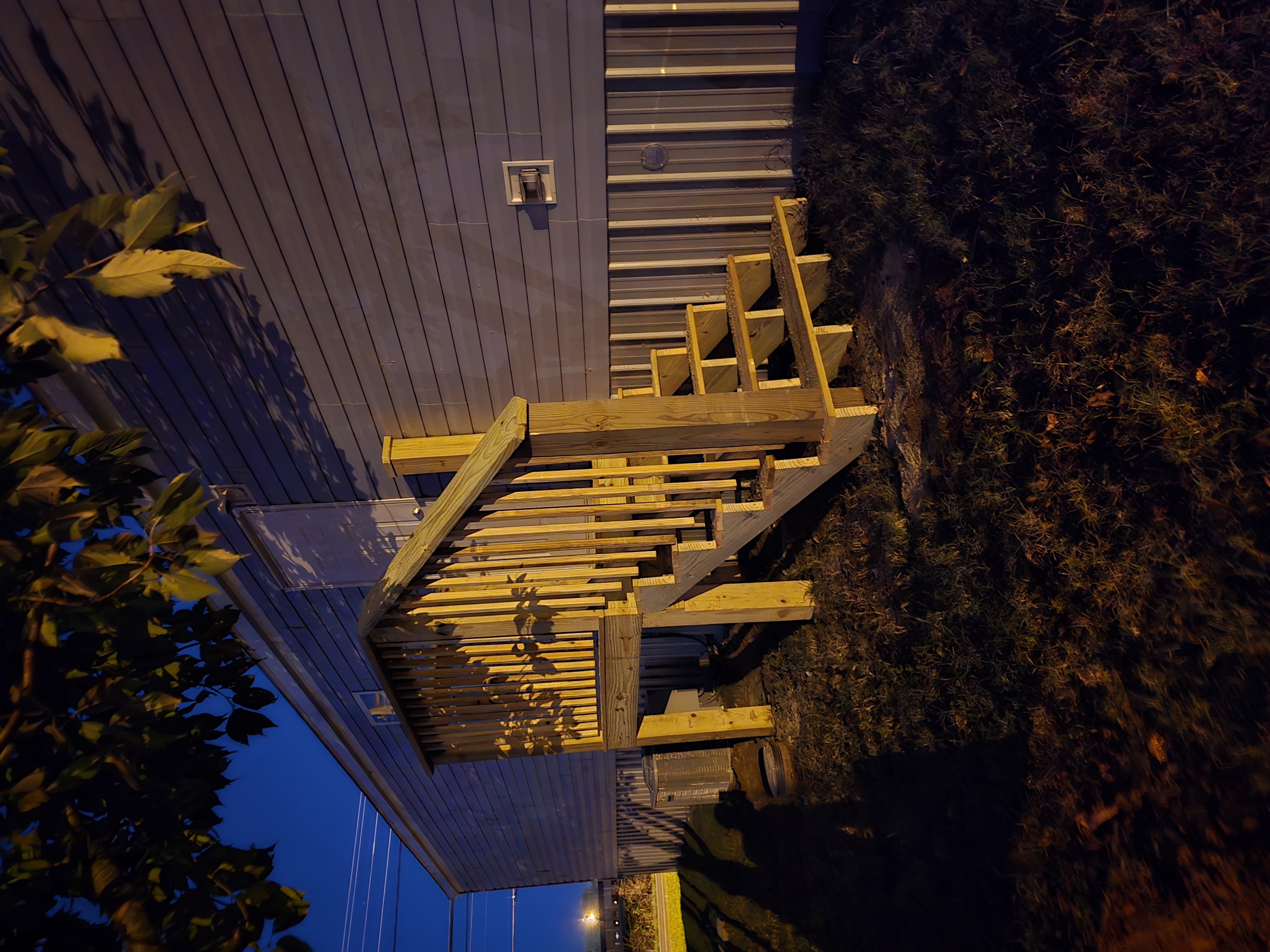
Proper deck framing — joist hangers at every connection, ledger flashing visible at the house wall, concrete footings below frost line.
The single biggest cause: ledger board failure
Ledger board failure accounts for the majority of catastrophic deck collapses. The ledger is the horizontal board that connects your deck frame to your house. When it fails, the deck peels away from the house suddenly — often with people on it. The failure almost always develops slowly from water infiltration and is invisible from the surface until the collapse happens.
Here's how it happens: the ledger is bolted through the house's exterior wall into the band joist (the rim board at the edge of the floor framing). If the ledger isn't properly flashed — meaning a metal or membrane barrier between the ledger and the house wall — water gets behind the ledger with every rain event. Over several years, that water rots the band joist from the inside. The lag bolts that connect the ledger to the house end up bolted through rotted wood that can no longer hold the load. Then on a day when the deck is full of people, the ledger connection pulls out of the wall.
Proper ledger flashing — Z-flashing above the ledger, sill pan flashing below — is not optional. It's code in every jurisdiction for a reason. We flash every ledger we install, and we inspect it with the building inspector before the deck surface covers it.
The second cause: improper footings
Every deck post needs to sit on a concrete footing that extends below the frost line. In Tennessee, the frost line is approximately 12 inches — not deep compared to northern states, but real. A footing that doesn't extend below frost depth will heave during the occasional hard freeze, shifting the posts and cracking connections throughout the deck frame.
Worse than shallow footings is no footings at all — posts buried in the ground without concrete, which was common practice in older construction. Buried wood rots. We see plenty of older decks in Lawrence and Giles County where the post bases are soft and the deck is noticeably out of plumb because the posts have rotted at grade. By the time you notice the posts leaning, significant structural integrity has been compromised.
The third cause: railing post attachment
Railing posts need to be through-bolted to the rim joist of the deck frame with structural hardware — not just toe-nailed, not surface-mounted with deck screws. Improperly attached railing posts are one of the most common deficiencies we see on unpermitted decks. A railing that isn't properly bolted will pass a casual visual inspection and then fail when someone leans against it — which is exactly when you need it most.
The code requirement is 200 lbs of outward force at the top of the railing — a meaningful test that properly bolted posts pass and surface-mounted posts fail. This is one of the specific elements a building inspector verifies during a framing inspection before the decking surface is installed.
The fourth cause: missing connector hardware
Every joist-to-beam connection needs a metal joist hanger — a galvanized bracket that holds the joist from below. Without joist hangers, the joist is just resting in a notch or toed into the beam with nails. Under load cycles over years, those nailed connections loosen and the joist begins to rotate, which spreads the frame and compromises the deck's structural integrity.
On any permitted deck, the inspector verifies that joist hangers are present at every connection before the surface goes on. This is one of the reasons we say permits matter: the inspection forces the issue at the one moment when it's easy to fix.
Why unpermitted decks fail at a much higher rate
A building permit with inspections forces a third-party review of the specific structural elements that cause most collapses — ledger connection, footing depth, railing attachment, and joist hardware — at the exact moment during construction when they're still visible and correctable. Once the decking surface is down and the skirting is on, all four of these elements are hidden and can only be assessed by pulling the deck apart.
Unpermitted decks skip this verification entirely. Some are built correctly anyway. Many are not. The problem is that you don't know which category yours falls into until something goes wrong.
Frequently asked questions
What is the most common cause of deck collapses?
Ledger board failure — the connection between the deck frame and the house. Improper or missing flashing allows water infiltration that rots the band joist behind the ledger over several years, until the connection fails under load.
How do I know if my deck is safe?
Check five things: proper ledger flashing and bolting, concrete footings below frost line, railing posts bolted through the rim joist, joist hangers at every connection, and no soft rot at ledger and post bases. If you're not sure how to evaluate any of these, call us for an assessment.
Does a permit prevent deck collapse?
A permit with inspections significantly reduces risk — the inspector verifies ledger connection, footing depth, railing attachment, and joist hardware before the surface is installed. These are the exact elements that cause most collapses and are invisible after construction.
Can a deck collapse without warning?
Yes — particularly ledger failures, where the rot is hidden inside the wall cavity. A deck can look structurally sound from the surface while the ledger connection is significantly compromised. This is why flashing during construction is not optional.
Should I be worried about my existing deck?
If your deck was built without a permit, is more than 10 years old, or shows any bounce, soft spots, or railing wobble — a professional assessment is worth the cost. Call us and we can evaluate the structural elements before they become a problem.
Concerned about an existing deck or ready to build a new one correctly? Call (931) 369-2134 or contact us for an assessment or estimate. See our deck construction service page and our guide on what happens if you build a deck without a permit in Tennessee.