What Happens if You Build a Deck Without a Permit in Tennessee?
We get this question a lot in Lawrence and Giles County: does a deck really need a permit? The honest answer is yes — for any deck attached to a house in Tennessee — and the consequences of skipping it are more serious than most homeowners realize. Here's the straight answer without the bureaucratic hedging.
The short version: Building an attached deck without a permit in Tennessee is illegal, can result in a demolition order, will complicate any future home sale, and may void your homeowners insurance claim if someone is injured on it. The permit process takes 2–3 weeks and costs a few hundred dollars. The retroactive fix, if discovered, costs far more.
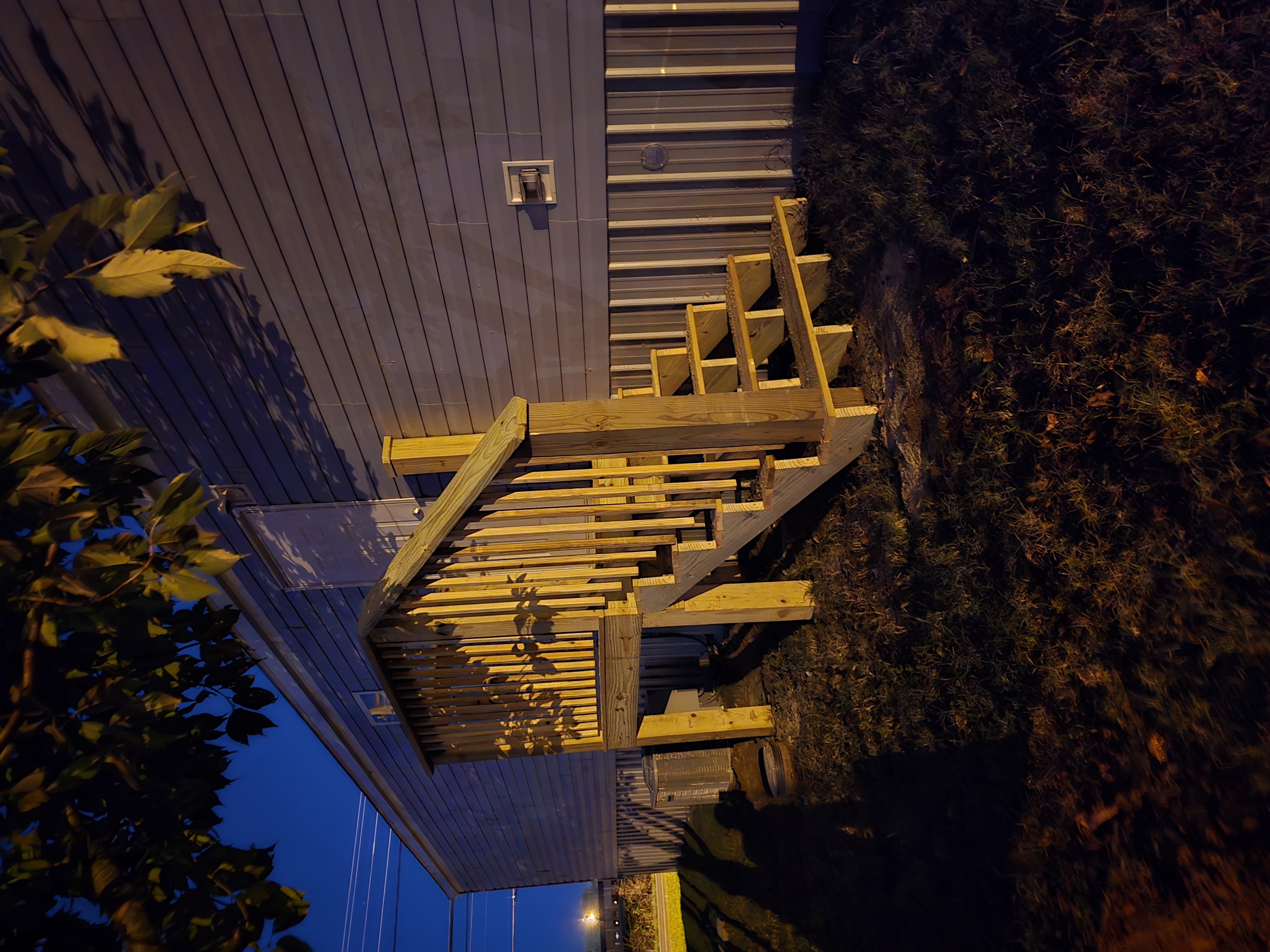
A permitted deck under construction — inspections happen at footing and framing stages, before any surfaces are installed.
What Tennessee law requires
Tennessee's State Building Code requires a building permit for any structure attached to a residence that could affect its structural integrity — which includes any deck attached to the house. This applies across Lawrence County, Giles County, and every municipality in between. The City of Lawrenceburg and City of Pulaski each enforce their own building departments within city limits; the counties enforce outside city limits.
There is no meaningful exemption for "small" attached decks. A 10x12 deck that connects to your house needs a permit. The permit triggers inspections at footing and framing stages — the two moments when structural deficiencies are easiest to catch and correct.
The four real consequences of skipping the permit
1. Stop-work orders and demolition requirements
If the county discovers unpermitted construction — from a neighbor complaint, a visible inspection of the property, or a routine drive-by — they can issue a stop-work order and require the structure to be demolished or brought into compliance. "Brought into compliance" almost always means opening up the finished structure for inspection, which is significantly more disruptive and expensive than a pre-construction permit would have been.
2. Home sale complications
Tennessee requires disclosure of unpermitted structures during a home sale. Once you disclose an unpermitted deck, buyers have options: require a retroactive permit (opening the finished structure), demand a price reduction, or walk away. Many lenders will not finance homes with unpermitted additions. We've seen deals fall apart specifically over unpermitted decks in Lawrence County. This is a real outcome, not a theoretical one.
3. Insurance liability
If someone is injured on an unpermitted deck, your homeowners insurance carrier may investigate the structure. A deck built without permits — which skipped the inspections that verify safe structural elements — is grounds for a coverage denial in some cases. You'd be personally liable for the injury in a situation where a permitted, inspected deck would have been covered. The savings on skipping a permit are not worth this exposure.
4. No verification of structural safety
The permit inspection catches the four structural deficiencies that cause deck collapses — ledger connection, footing depth, railing attachment, and joist hardware — at the one moment they're accessible and correctable. Without a permit, there's no third-party verification of any of these. Some unpermitted decks are built correctly. Many are not. You won't know which yours is.
What the permit process actually involves
For a deck in Lawrence or Giles County, the permit process involves submitting an application with a site plan (showing deck dimensions and location relative to property lines) and basic structural drawings (footing detail, ledger connection, joist span, railing height). We prepare and submit this documentation as part of every deck project. Review time in our experience is 2–3 weeks for a complete application. The permit fee for a residential deck is typically $150–$400 depending on size and jurisdiction.
Two inspections follow: a footing inspection before concrete is poured (verifying depth and diameter), and a framing inspection before decking is installed (verifying ledger connection, joist hangers, and railing post attachment). Both happen at stages when corrections are easy and inexpensive. After the framing inspection passes, we install the decking and finish the project.
Frequently asked questions
Can I build a deck without a permit in Tennessee?
Any attached deck requires a permit under Tennessee's building code. You can build without one, but doing so is illegal and creates stop-work risk, home sale complications, insurance liability, and no structural verification. The permit costs a few hundred dollars and takes 2–3 weeks — it's not the obstacle people assume.
Will the county find out if I build a deck without a permit?
Often yes. Neighbors call, real estate transactions trigger disclosure, insurance claims prompt inspections, and satellite imagery catches structural additions. We've seen unpermitted decks surface at home sales years after they were built.
What happens at a home sale if the deck was built without a permit?
You must disclose it to buyers in Tennessee. Buyers or lenders may require a retroactive permit, a price reduction, or demolition. Some lenders won't finance homes with unpermitted structures. This is a deal-breaker situation we've seen in Lawrence County.
Can I get a permit for a deck after it's built?
Retroactive permits are possible but cost 2–4x more than pre-construction permits. The inspector needs to verify structural elements normally visible during framing inspection — which means opening finished surfaces. It's significantly more disruptive than permitting before you start.
What is the permit process for a deck in Lawrence or Giles County?
Submit an application with site plan and structural drawings. Review takes 2–3 weeks. Two inspections follow: footing before pour and framing before decking. We handle all of this on every deck project we build — you don't visit any permit office.
Build your deck right the first time. Call (931) 369-2134 or request a free estimate. We handle permits and inspections on every project. See our deck construction service page, our local deck cost guide, and our post on what causes deck collapses.