Trex vs Pressure-Treated Decking — Which is Better for Tennessee?
This is the most common material question homeowners ask when we're quoting a deck in Lawrenceburg or Pulaski. We build decks with both materials and don't have a financial reason to push one over the other — so this is as honest an answer as you're going to get from a contractor in this market.
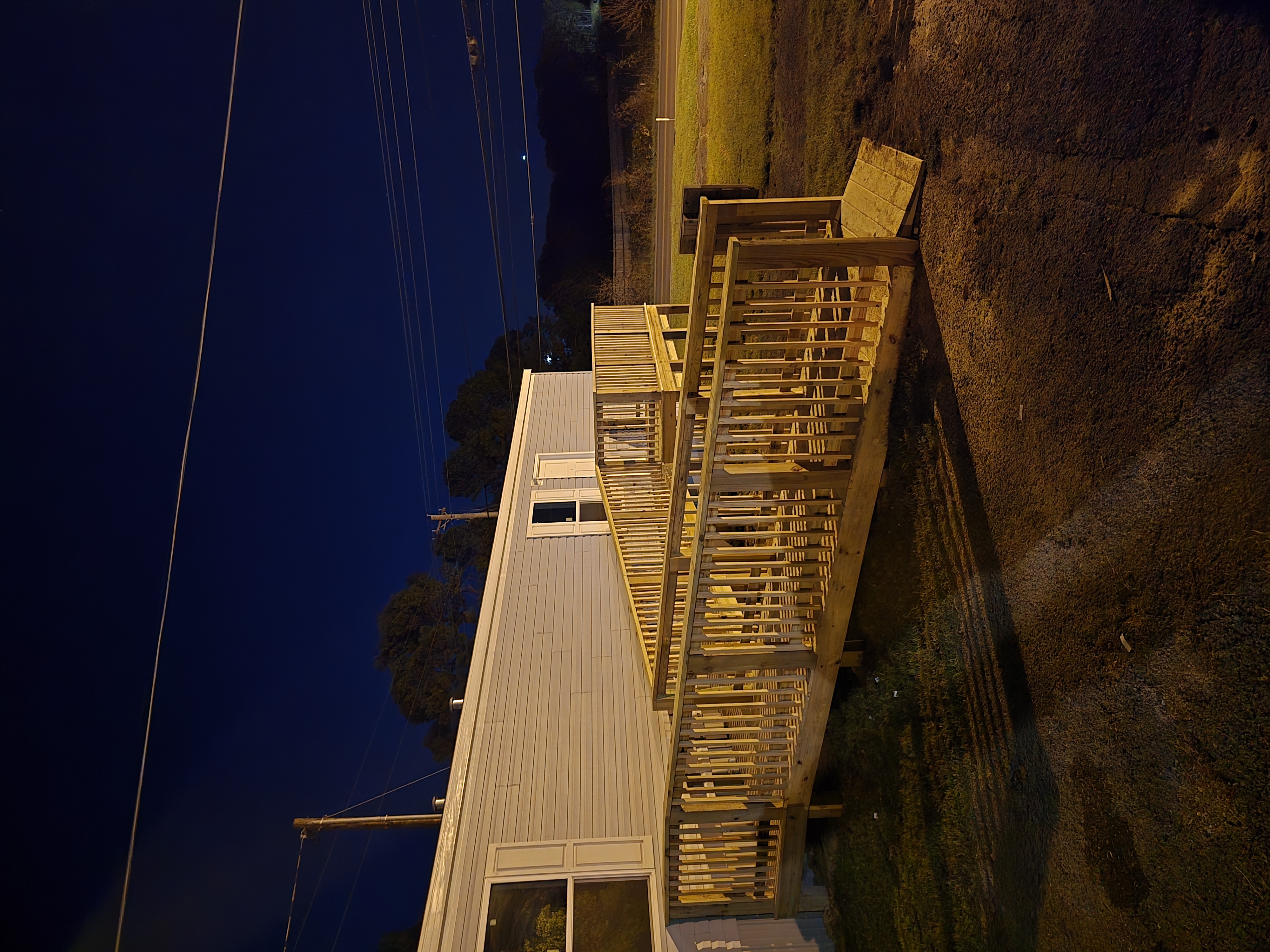
A composite deck installation in Lawrence County — the surface boards are Trex-type composite; the substructure beneath is always pressure-treated regardless of which surface you choose.
Quick answer
For most Tennessee homeowners staying in their home 10+ years: composite is worth the premium. Tennessee's summer UV exposure fades pressure-treated wood significantly faster than northern climates, and maintenance costs (staining, sanding, sealing every 2–3 years) add up. If you're selling within a few years, budget-constrained, or have a shaded deck with limited UV exposure, pressure-treated is a completely legitimate choice.
Upfront cost difference in Middle Tennessee
Both materials use pressure-treated lumber for the substructure — joists, beams, ledger, posts. That's identical regardless of which surface you choose. The cost difference is entirely in the decking boards and railing system. In Lawrence and Giles County in 2025, composite decking boards (Trex Enhance, TimberTech AZEK, or comparable) add $4,000–$8,000 over pressure-treated surface boards on a 16x20 deck. For a larger 20x24 deck, that premium is $6,000–$12,000.
Pressure-Treated
- $28–$38/sq ft installed (surface)
- Requires sealing every 2–3 years
- Sands and grays without treatment
- Can splinter over time
- Handles heat slightly better in sun
- Repairs blend easily
- 20–25 year lifespan with maintenance
Composite (Trex, TimberTech)
- $42–$58/sq ft installed (surface)
- No staining, sealing, or sanding
- Color holds for 25+ years
- No splinters — safer barefoot
- Can get hot in direct sun
- Repairs more visible if needed
- 30–50 year lifespan
How Tennessee's climate affects the comparison
Tennessee gets roughly 200+ days of sun annually and summer UV intensity that significantly accelerates wood weathering. An unfinished pressure-treated deck in Lawrenceburg or Pulaski will gray and check (develop surface cracks) faster than the same deck would in Minnesota. If you skip the annual cleaning and seal every 2–3 years, you'll see significant surface degradation within 5–8 years. Composite holds its color and surface regardless of UV exposure — that's what the fade warranty covers.
The heat issue is real but manageable. On a full southern-exposure deck with no overhead shade, composite boards in dark colors can get uncomfortably hot at peak afternoon temperatures in July. The fix is choosing lighter-colored composite boards or ensuring the deck has some afternoon shade from the house or an overhead structure. For decks with eastern or northern exposure, heat is a non-issue.
The maintenance cost math
Pressure-treated decks that are maintained correctly — cleaned annually, sealed or stained every 2–3 years — last 20–25 years and look reasonably good throughout. The maintenance cost runs $300–$600 every 2–3 years for a mid-size deck (materials plus your time, or a professional cleaning and seal service). Over a 25-year span, that's $3,000–$6,000 in maintenance costs added to the initial build cost.
Composite decks require an occasional brush and water clean — a couple hours per year, no products required. Maintenance cost is effectively zero. For a homeowner who doesn't want to spend weekends maintaining a deck, composite eliminates that labor entirely. When you factor maintenance cost over a 25-year horizon, the lifetime cost difference between composite and pressure-treated narrows considerably in composite's favor.
When pressure-treated makes more sense
If you're planning to sell the property within 3–5 years, the full composite premium may not be recovered at sale — both materials will look similar at that age and a new buyer may not value the difference. If your budget is a hard constraint, pressure-treated lets you build a larger, better-designed deck for the same money. And if your deck has significant shade from the house or trees — eastern or northern exposure — pressure-treated will weather slower and the maintenance gap between the two materials narrows.
Frequently asked questions
Is Trex worth the extra cost in Tennessee?
For most homeowners staying 10+ years: yes. Tennessee's UV exposure accelerates PT wood weathering and the maintenance gap is meaningful over time. For short-term ownership or shaded decks, pressure-treated is a legitimate choice.
How much more does composite cost in Middle Tennessee?
Composite surface boards add roughly $4,000–$8,000 on a 16x20 deck over pressure-treated. The substructure is PT lumber either way. That premium pays back in maintenance savings over 7–10 years for most homeowners.
Does Trex get hot in Tennessee summers?
Yes, in direct southern sun in July, dark composite can get uncomfortably hot barefoot. Lighter colors run cooler. For eastern or shaded decks, heat isn't a meaningful concern. This is worth discussing based on your specific site orientation.
How long does pressure-treated decking last in Tennessee?
With proper maintenance (cleaning annually, sealing every 2–3 years), 20–25 years. Without maintenance, visible weathering and surface checking within 7–10 years. Tennessee's UV exposure is harder on wood than northern climates.
Does Trex require any maintenance?
Minimal — occasional cleaning with a brush and water. No staining, sealing, or sanding. Most composite brands carry 25-year fade and stain warranties. Annual maintenance cost is essentially zero beyond occasional cleaning.
Ready to get a deck quote with an honest material recommendation for your property? Call (931) 369-2134 or request an estimate. See our deck construction service page and our local deck cost guide for Pulaski and Lawrenceburg.