Can You Pour Concrete After a Metal Building Is Built?
This question comes up often when someone has an existing metal building or pole barn without a concrete floor and decides they want to upgrade it. Or when a homeowner bought a property with a building already on it and wants to add a concrete floor. The short answer is yes — pouring concrete inside a completed building is a routine job we do in Lawrence and Giles County. Here's how it works.
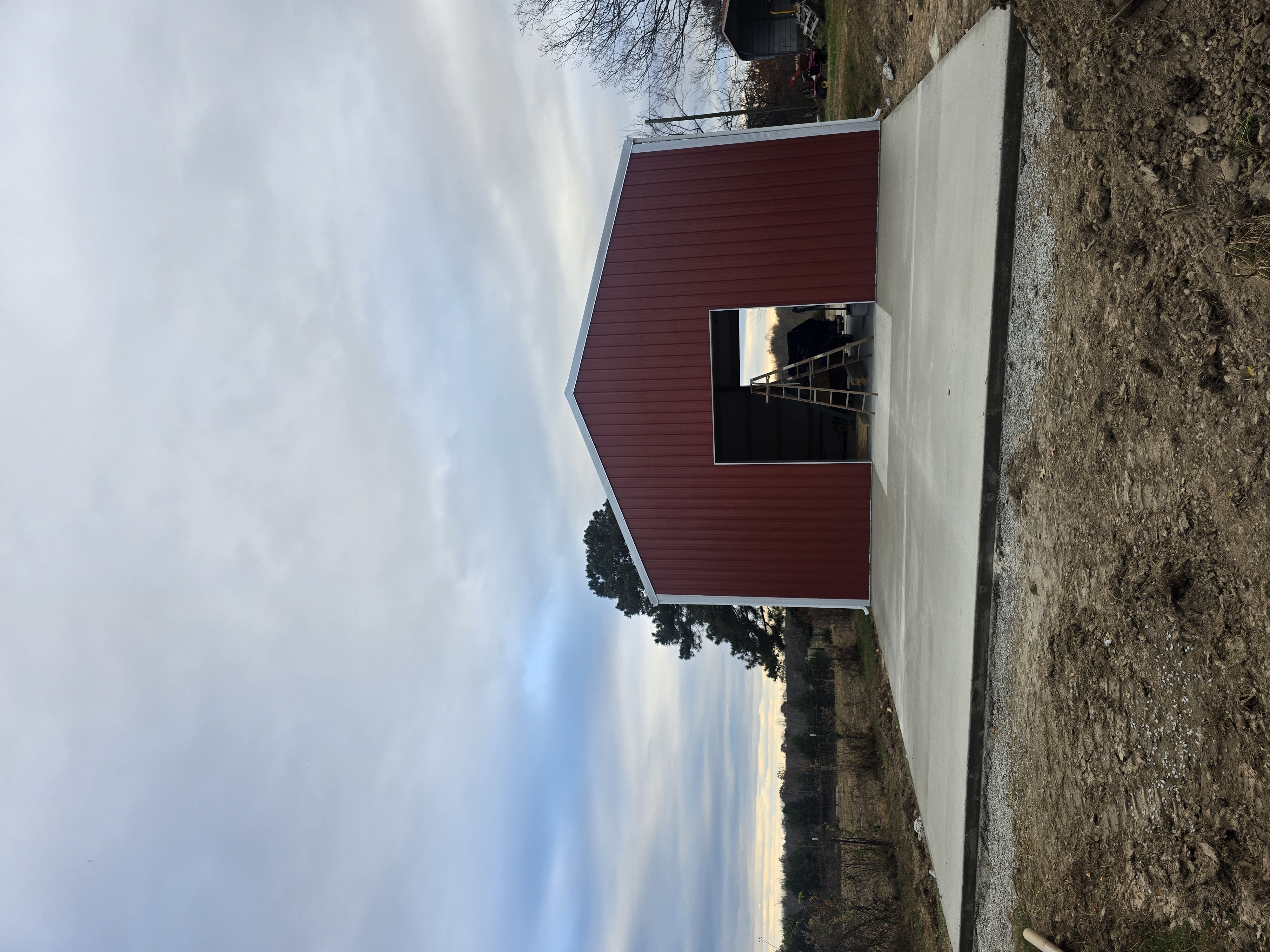
A concrete slab poured inside a completed post-frame building in Lawrence County — base prep and reinforcement laid out before concrete placement.
Quick answer
Yes — concrete can be poured inside a completed metal or pole barn building. The key question is access: if the overhead door opening is wide enough for a concrete truck to approach, the pour is straightforward. If not, a pump truck handles it from outside. We've done this many times in Lawrence and Giles County on buildings ranging from 20x30 to 50x100.
How concrete truck access works inside a completed building
A standard ready-mix truck needs to get its chute close enough to the pour area to place concrete without long wheelbarrow runs, which add labor cost and time. Most overhead doors on metal buildings are 10–16 feet wide — wide enough for a truck to approach from outside and reach well into the building with an extended chute. For a small building (30x40 or less) with a standard 12-foot overhead door, direct truck access usually works for everything within 15–20 feet of the door. The rear of a deeper building needs a pump line or is poured in a separate section when the truck pulls further back.
A pump truck positioned outside the building runs a flexible hose through the overhead door opening and can reach every part of a large building interior. On a 40x60 or 50x100 building, we almost always use a pump truck regardless of whether the building is pre-built or open — the pour goes faster and the crew controls placement more precisely. Pump truck rental in Middle Tennessee runs $800–$1,500 and is typically included in the quote when needed.
Pre-engineered vs post-frame: different sequencing
For pre-engineered steel buildings (the clear-span commercial-style steel frame buildings), the slab typically must come first. Steel column anchor bolts are embedded in the slab and the building's frame bolts down to them. You can't build the steel frame without the anchor bolt pattern in the slab — so for this building type, slab first is not optional.
For post-frame pole barn buildings, the posts are embedded in the ground, not anchored into the slab. The slab pours around the posts after the building is up. This is the building type where "pour after" is most common and most practical. The roof being in place actually benefits the slab in Tennessee — it provides shade during the pour (keeping the concrete cooler and more workable on hot days) and protects the fresh slab from afternoon rain during the critical early cure hours.
What to address before pouring inside an existing building
- Electrical conduit: If the building needs electrical, stub out conduit during the pour — before any concrete is placed. This is the last chance to do it without core drilling.
- Post base condition: For embedded post-frame buildings, check the post bases at grade before forming around them. If any posts show rot at grade, address it before locking them in concrete.
- Drainage: Plan the slab grade so drainage slopes toward the door openings. Inside a completed building you can't easily regrade after the pour — the slope needs to be in the forming.
- Subgrade: If the building floor has been used as a gravel or dirt floor, the subgrade may be disturbed and require re-compaction. We evaluate subgrade condition during the estimate visit.
Frequently asked questions
Can you pour concrete after a metal building is built?
Yes — this is a routine job in Lawrence and Giles County. Concrete truck access through the overhead door or pump truck from outside handles material placement. We've poured inside buildings ranging from 20x30 to 50x100.
Is it better to pour the slab before or after the building?
For pre-engineered steel frame buildings: slab must come first (anchor bolts). For post-frame pole barns: pouring after the roof is up is common and protects the fresh slab from Tennessee's afternoon summer storms.
What are the advantages of pouring inside a completed building?
Shade during the pour on hot days, protection from afternoon rain during early cure, and precise slab layout around known post locations. For Tennessee summer pours, working under a roof significantly reduces heat stress on the concrete.
Does pouring inside a completed building cost more?
Sometimes slightly more due to pump truck rental ($800–$1,500) if truck access through the door isn't adequate. For larger slabs where a pump would have been used anyway, there's often no meaningful cost difference from an open-site pour.
How do you handle base prep inside an existing building?
Standard process: excavate to subgrade, compact, place and compact crushed stone base, vapor barrier if specified, reinforcement, forming — all working around the building posts or columns. This is routine work with the right equipment and crew.
Have an existing building that needs a concrete floor in Lawrenceburg, Pulaski, or Middle Tennessee? Call (931) 369-2134 or request a free estimate. See our concrete services page, our 30x50 slab cost guide, and our 40x60 slab pricing breakdown.