Is a Concrete Driveway Worth It? An Honest Answer for Tennessee Homeowners
When people call us about a concrete driveway in Lawrenceburg or Pulaski, one of the first questions is some version of this: "Is it really worth the money?" It's a fair question. Concrete costs significantly more upfront than asphalt or gravel — a two-car driveway in Lawrence County easily runs $8,000 to $15,000. We pour concrete for a living, so we have a bias, but we'll give you the straight answer anyway.
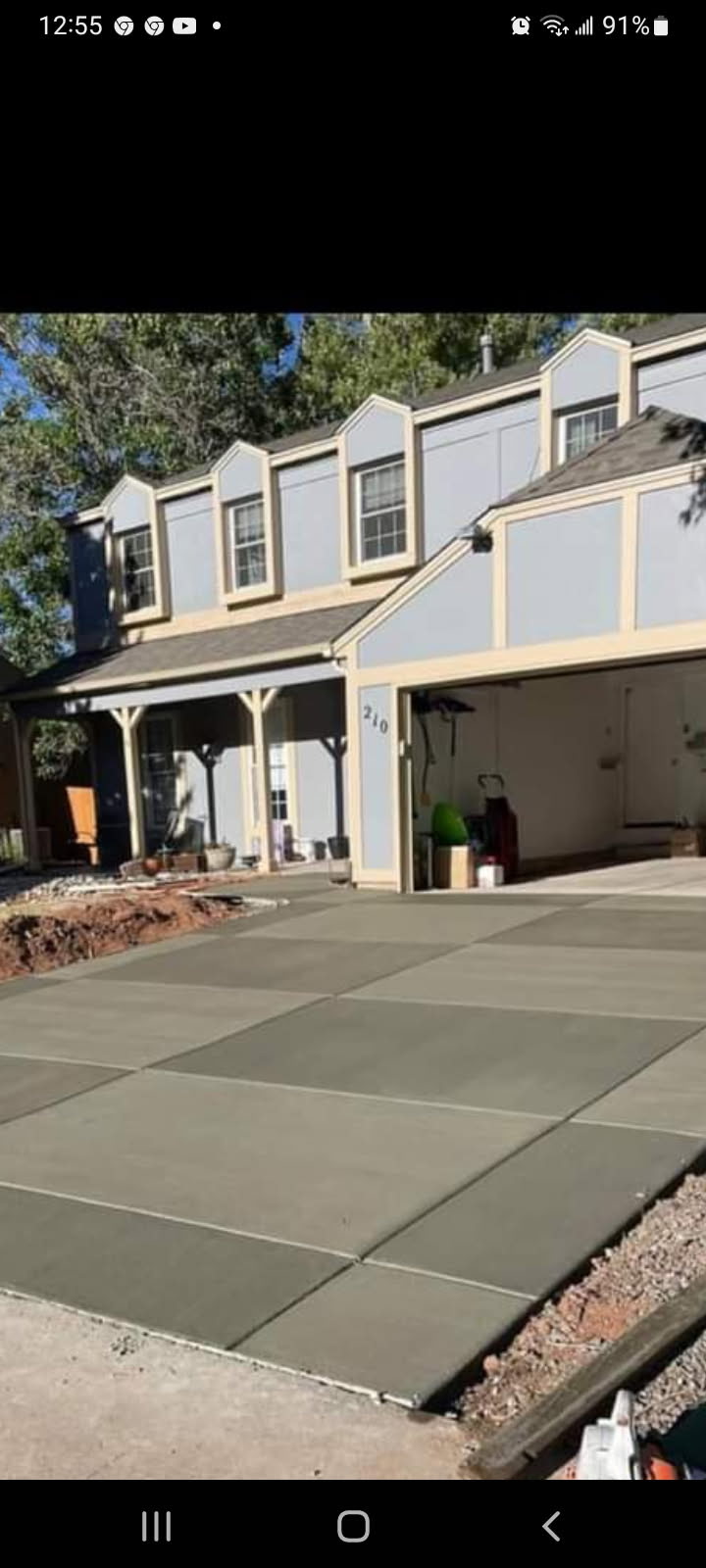
A well-installed concrete driveway in Lawrence County — properly jointed, properly graded, and built to last decades with minimal maintenance.
Quick answer
For most Tennessee homeowners planning to stay in their home for 10 or more years, yes, concrete is worth it. The upfront cost is higher, but the near-zero maintenance requirement and 35 to 50 year lifespan make it the better value on a long horizon. If you're selling soon, working with a limited budget, or have a very long rural driveway, the calculus shifts. We'll break all of this down below.
The honest lifetime cost comparison
The upfront cost gap between concrete and asphalt on a 700 square foot driveway in our market is roughly $3,000 to $7,000 in asphalt's favor. That's real money. But here's what the 30-year picture looks like:
A concrete driveway installed in 2025 may need nothing but occasional sealing (optional, not mandatory) through 2055. Total maintenance cost in that window: $0 to $1,500. A comparable asphalt driveway will need sealing every 3 to 5 years ($200 to $400 per sealing), crack filling periodically, and will likely need resurfacing or replacement in the 15 to 20 year range — adding another $4,000 to $12,000 to the lifetime cost depending on your driveway size and what's needed.
When you add those numbers together, a concrete driveway typically costs less over 30 years than asphalt does — despite costing more on day one. The break-even point for most homeowners in Lawrence County is somewhere in the 10 to 15 year range.
What concrete does that asphalt and gravel can't
Appearance: Concrete driveways simply look better — and they look better consistently over time. Asphalt fades and oxidizes. Gravel spreads and gets in the grass. Concrete ages well and can be cleaned easily. For homes where curb appeal matters — in town lots in Lawrenceburg where the driveway is visible from the street — concrete makes a meaningful visual difference.
Load capacity: A properly spec'd concrete driveway handles heavy vehicles without the soft-spot rutting that asphalt can develop near vehicle parking areas in Tennessee's summer heat. If you park trucks, pull trailers, or have equipment coming to the property regularly, concrete is the more durable surface.
Decorative options: Stamped concrete, colored concrete, and exposed aggregate are all options only concrete offers. If you want a driveway that looks like stone or has a border pattern, concrete is your only real path to that result. Asphalt is black; that's the only option.
When concrete is not the right choice
Selling the property in 1 to 2 years: You likely won't recover the cost premium at sale within that timeline. A well-maintained asphalt driveway or a fresh gravel surface will achieve the same curb appeal objective at a fraction of the cost. Invest the difference in improvements with faster return.
Very long rural driveways: A 300-foot concrete approach at 12 feet wide is 3,600 square feet — at $8 to $12 per square foot, that's $28,800 to $43,200 just for the driveway. In those situations, a properly installed gravel surface or a selective concrete approach (concrete at the house end, gravel for the long run) is a financially reasonable alternative.
Properties with significant grade or drainage challenges: These don't make concrete wrong — they make site prep more complex. But if your lot has a significant drainage problem that hasn't been addressed, pouring concrete without fixing the underlying drainage issue first is money partially wasted. Address drainage, then pour.
What makes a concrete driveway last — the installation variables that matter most
The lifespan difference between a concrete driveway that fails in 8 years and one that lasts 45 years is almost never the concrete itself — it's the installation. The three biggest failure points we see in Lawrence County:
Inadequate base: Concrete needs a stable, compacted base beneath it. Poured over soft ground, clay that wasn't properly compacted, or fill that wasn't given time to settle, concrete will move and crack. Base preparation — typically 4 to 6 inches of compacted crushed stone — is non-negotiable on any driveway we install.
Wrong thickness for the load: A 3-inch slab that gets driven on by a full-size truck is going to fail. We match thickness to use: 4 inches for passenger vehicles, 5 inches for pickups and trailers, 6 inches for heavy equipment. The conversation about what you're parking on it happens at the site visit, not after the concrete is poured.
Missing control joints: Concrete cracks. It's going to happen — the question is where. Control joints are saw-cut into the slab after the pour to create intentional weak points that direct cracking to those lines rather than randomly across the surface. Without them, you get random cracking within a few years. We cut joints on every driveway we pour.
Frequently asked questions
How long does a concrete driveway last in Tennessee?
A properly installed concrete driveway in Middle Tennessee should last 35 to 50 years. Tennessee's climate — warm, wet, with occasional freezing — is not particularly hard on concrete compared to northern states. The biggest lifespan risk is installation quality, not climate.
Does a concrete driveway add home value?
Yes. Concrete driveways are perceived as a premium feature and typically appraise and show better than asphalt or gravel. The curb appeal improvement from replacing a worn driveway with concrete is significant and frequently mentioned by real estate agents and buyers in the Lawrence County market.
How much does it cost to maintain a concrete driveway?
Very little. Optional sealing every 3 to 5 years ($200 to $500 professionally applied) helps prevent staining and minor surface weathering. Crack repair, if needed, is $3 to $10 per linear foot depending on size. Mandatory maintenance for a well-installed concrete driveway is essentially zero for the first 10 to 20 years.
What is the biggest risk to a concrete driveway's lifespan?
Poor installation — specifically inadequate subgrade preparation, insufficient thickness, and missing control joints. A properly designed slab on stable, well-prepared ground handles Tennessee's climate without issue for decades. The same slab on poorly compacted fill or clay without adequate base prep will crack within a few years.
When is a concrete driveway not worth it?
When you plan to sell within 1 to 2 years and the current driveway is functional. When budget constraints are real and the driveway is very long. When other property improvements would produce faster return on the same investment. These are honest exceptions — for most long-term homeowners in our area, concrete is the right choice.
Ready to get a concrete driveway estimate? Call us at (931) 369-2134 or fill out our contact form. We serve Lawrenceburg, Pulaski, Minor Hill, Ardmore, and surrounding Middle Tennessee. See our driveway service page and our Lawrenceburg pricing guide for more on what we offer.